

Pinterest still has millions of users, but the experience feels very different now compared to a few years ago.
The platform that once felt calm and inspiring has slowly turned into a mix of sponsored posts, AI-generated images, shopping recommendations, and algorithm-heavy feeds.
For some people, that’s fine.
But many users are now looking for platforms that feel cleaner, quieter, and more focused on real inspiration instead of endless engagement.
Over the last few weeks, I tested some of the most popular Pinterest alternatives to see which ones genuinely offer a better experience in certain areas like design inspiration, visual bookmarking, research, mood boards, creative planning, and content discovery.
Some are built for designers. Some work better for saving ideas. Others are surprisingly good for deep research and creative organization.
These are the best Pinterest alternatives worth trying right now.
Why People Are Leaving Pinterest
Pinterest is still huge, but many longtime users feel the platform has become harder to enjoy.
The biggest complaint is the amount of advertising. Promoted posts appear constantly, especially in popular categories like fashion, home decor, beauty, and technology.
The recommendation system has also changed a lot. Instead of mainly showing content related to what you save, Pinterest now pushes broader suggestions designed to increase clicks and shopping activity.
AI-generated images are another major reason people are exploring alternatives. Search results are increasingly filled with synthetic artwork, fake interiors, unrealistic products, and recycled visual content that often feels repetitive.
For creatives, researchers, bloggers, and designers, that can make inspiration harder to find instead of easier.
That doesn’t mean Pinterest is useless now.
But using a second platform alongside it can dramatically improve how you collect ideas, organize inspiration, and discover new creative work.
1. Cosmos — The Closest Alternative to Classic Pinterest
Cosmos feels like what Pinterest used to be before the platform became overly commercialized.
Instead of focusing on trends, engagement, and shopping recommendations, Cosmos is built around quiet inspiration and visual organization.
You can save images, websites, videos, text snippets, and references into visual clusters that work almost like modern mood boards.
The overall experience feels noticeably calmer.
There are no noisy comment sections, no engagement pressure, and no endless stream of sponsored content interrupting your browsing.
What impressed me most was how intentional everything feels. The platform encourages collecting ideas slowly instead of endlessly scrolling.
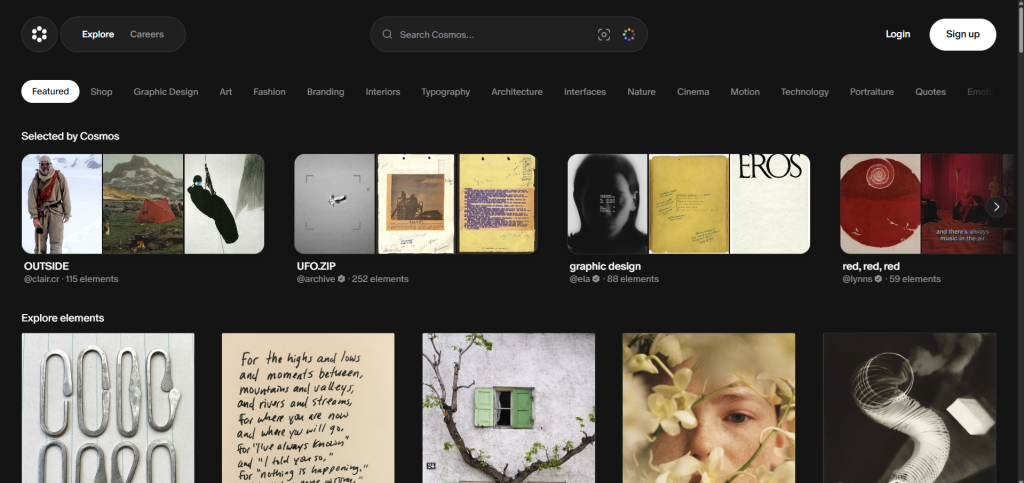
One feature that genuinely stands out is the ability to import your Pinterest boards directly into Cosmos. That removes one of the biggest problems people face when switching platforms.
The built-in AI filtering tools are also surprisingly useful. You can reduce AI-generated content and focus more on authentic creative work, something Pinterest only recently started improving.
If your main goal is finding a cleaner, quieter replacement for Pinterest, Cosmos is probably the strongest option available right now.
What Makes It Good
- No advertisements or engagement pressure
- Beautiful and minimal interface
- Pinterest board importing works well
- Excellent for branding and creative inspiration
- AI filtering improves search quality
Things to Keep in Mind
- Smaller user base than Pinterest
- Discovery tools are still growing
- Limited collaboration features
2. Are.na — Best for Research and Creative Thinking
Are.na is completely different from Pinterest in the best possible way.
The platform focuses less on visual entertainment and more on connecting ideas, references, research, and inspiration into organized collections called channels.
You can save:
- images
- websites
- notes
- PDFs
- videos
- links
- text snippets
and combine them into creative research spaces that feel much deeper than a normal Pinterest board.
What makes Are.na interesting is the absence of algorithmic noise.
There are no ads, no viral feeds, no engagement tricks, and no pressure to constantly publish content.
The platform feels more like a digital research desk than a social network.
I started using Are.na while organizing design references and article research, and it quickly became one of the best tools I’ve tested for long-term creative thinking.
Instead of endlessly browsing random inspiration, you slowly build interconnected collections that become more valuable over time.
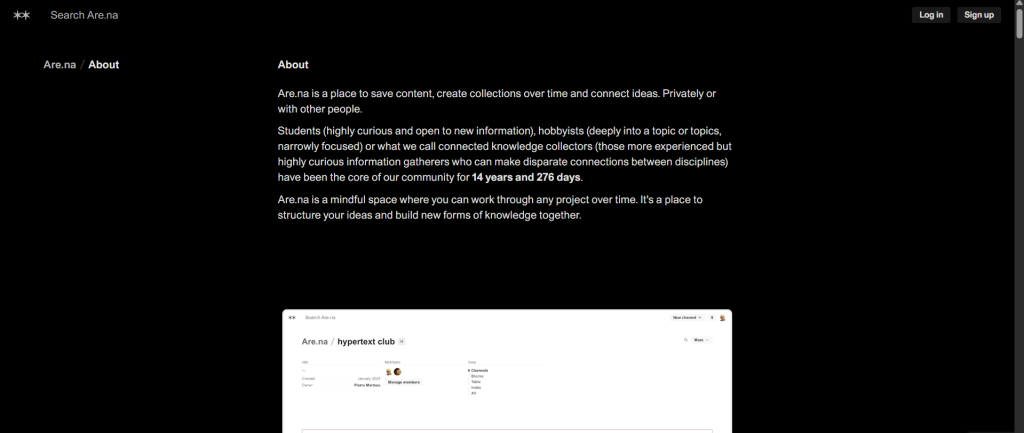
The minimalist interface may feel cold at first, especially if you’re used to Pinterest’s highly visual design.
But after spending time with it, the simplicity starts becoming part of the appeal.
Instead of trying to keep you scrolling forever, Are.na encourages slower discovery and intentional organization.
For designers, writers, researchers, students, and creatives who work with large amounts of inspiration, it’s one of the smartest alternatives available today.
3. Designspiration — Best for Color-Based Inspiration
Designspiration feels like a stripped-down version of Pinterest built specifically for visual creatives.
The platform focuses heavily on graphic design, typography, photography, branding, illustration, and digital artwork instead of trying to cover every topic imaginable.
That narrower focus immediately improves the quality of the content.
One of the most useful features is the color-based search system. Instead of typing only keywords, you can search using specific color palettes to discover visuals that match a certain mood or brand direction.
That alone makes it genuinely useful for designers working on branding projects, landing pages, mood boards, or creative campaigns.
I mainly tested Designspiration while collecting references for UI layouts and color combinations, and the experience felt far more focused than Pinterest.
There’s less clutter, fewer random distractions, and noticeably fewer low-quality posts.
The browser extension is also simple but useful. You can quickly save visuals from around the web into your collections without interrupting your workflow.
The downside is that the platform feels slightly outdated compared to newer tools. The interface hasn’t evolved much over the last few years, and the community is relatively small.
Still, if your main goal is finding high-quality visual inspiration without endless lifestyle content getting in the way, Designspiration does that extremely well.
Strengths
- Excellent color-based discovery system
- Higher-quality design content
- Cleaner browsing experience than Pinterest
- Useful for branding and UI inspiration
Weak Points
- Smaller creator community
- Interface feels dated
- Limited mobile experience
4. Dribbble — Best for Professional Design Inspiration
Dribbble has become one of the most popular platforms for professional designers sharing their work online.
Unlike Pinterest, which mixes together everything from recipes to fashion to shopping recommendations, Dribbble stays heavily focused on design.
That focus makes a huge difference.
The quality of work on the platform is significantly higher because most users are designers, illustrators, animators, branding specialists, and creative professionals showcasing real projects.
If you want inspiration for:
- UI design
- branding
- typography
- mobile apps
- web layouts
- illustration
- animation
Dribbble is one of the strongest platforms available.
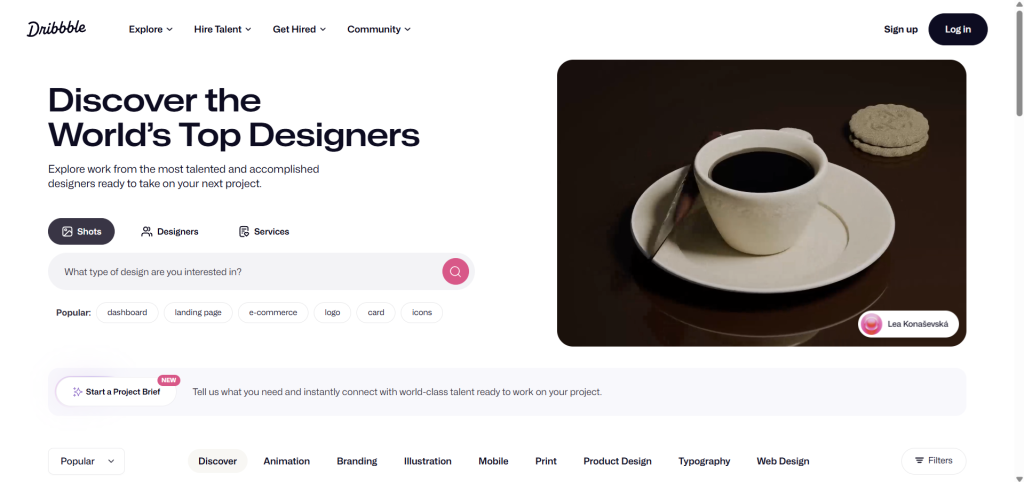
While browsing, I noticed the platform feels far more intentional than Pinterest. Most uploads are polished, original, and portfolio-quality rather than recycled reposts or AI-generated filler content.
The filtering system is also much better than Pinterest for creative work. You can narrow content by categories, tools, industries, and styles very quickly.
That said, Dribbble is definitely built for designers first.
If you are mainly looking for recipes, DIY ideas, home inspiration, or casual browsing, it probably won’t feel useful.
But for visual creatives, it’s one of the best inspiration sources online.
One thing worth mentioning is that Dribbble feels more like a showcase platform than a personal inspiration organizer.
You browse amazing work there, but the saving and organization features are much weaker compared to Pinterest or Cosmos.
So it works best alongside another tool rather than replacing Pinterest entirely.
5. Savee — Best for Visual Bookmarking
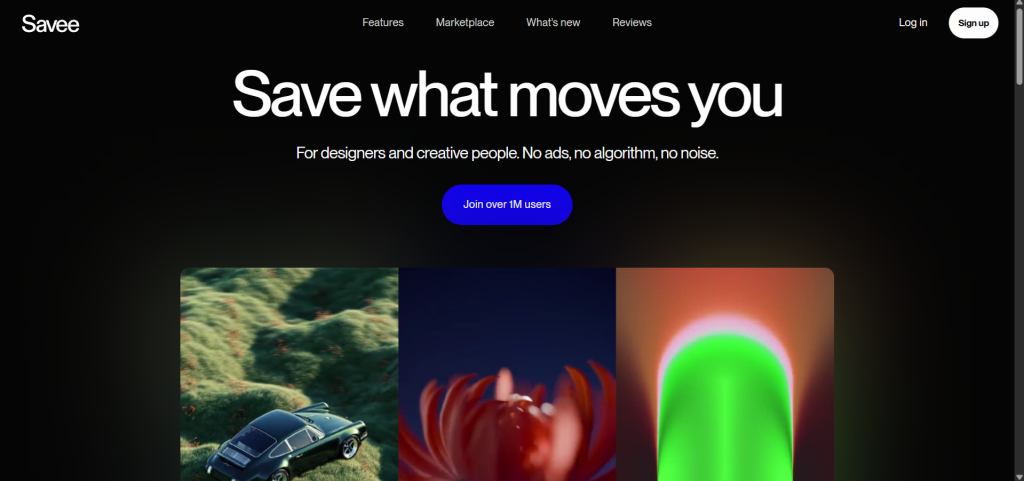
Savee feels like Pinterest rebuilt specifically for designers and art directors.
The entire platform is centered around saving visual references in the cleanest and simplest way possible.
The visual quality on Savee is noticeably stronger than Pinterest because the community is much smaller and far more design-focused.
Most of the content revolves around:
- branding
- typography
- editorial design
- UI references
- packaging
- photography
- creative direction
which gives the platform a much more curated feel.
Frequently Asked Questions
Which Pinterest Alternative Should You Choose?
If Pinterest doesn’t feel as inspiring as it used to, these five platforms are easily some of the best alternatives worth exploring right now.
Each one focuses on a different kind of creative experience.
Cosmos feels closest to the older version of Pinterest, with a calmer and cleaner approach to saving inspiration. Are.na works incredibly well for deep research and idea organization. Designspiration is perfect for color-focused visual discovery, while Dribbble and Savee offer much higher-quality inspiration for designers and creative professionals.
If you only try one platform from this list, start with Cosmos. But if you work in design or creative projects regularly, combining two of these tools usually works even better than relying entirely on Pinterest.
No related posts.

