

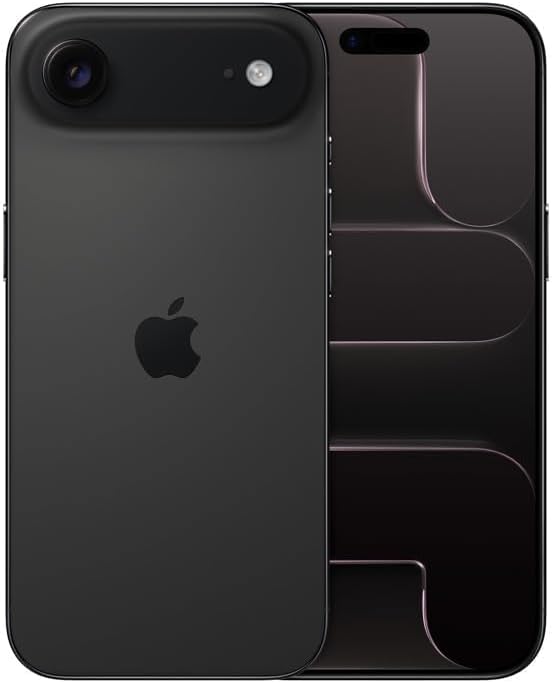
The iPhone Air is one of the most polarising iPhones Apple has ever made. Half the people who pick it up in a store walk out immediately wanting one. The other half look at the price tag, notice there’s only one rear camera, and put it back down.
Both reactions are completely valid.
The iPhone Air is not trying to be the best iPhone. That’s what the Pro Max is for. It’s not trying to be the most affordable iPhone either — that’s the iPhone 17 at $799. The Air is Apple’s design statement: a bet that a significant group of people will pay a premium for a phone that feels unlike anything else in their pocket. At 5.64mm thin and 165 grams, it genuinely does.
But months on from launch, with real reviews and long-term user impressions now in, the question is simple: is that thinness worth the trade-offs? Let me walk you through everything.
iPhone Air
| iPhone Air | |
|---|---|
| Price | From $999 |
| Display | 6.5″ OLED, 120Hz ProMotion |
| Chip | A19 Pro |
| Rear cameras | 48MP single |
| Front camera | 18MP Center Stage |
| Battery | 3,149 mAh / 27hrs video playback |
| Storage | 256GB / 512GB / 1TB |
| OS | iOS 26 |
| Thickness | 5.64mm |
| Weight | 165g |
Design & build — the thing you have to hold to understand
The iPhone Air has to be held to be fully appreciated. At just 5.64mm, it’s thinner than two stacked credit cards. The polished titanium frame catches light beautifully, and iOS 26’s Liquid Glass interface feels made for this device.
Travelers love how light it is — coming from a Pro Max, it almost disappears in your pocket. Durability is strong too: Ceramic Shield 2 now covers front and back, and the titanium frame handles drops well. A case is still a smart move.
One compromise: a single speaker. It’s fine for daily use, but sound is thinner than the stereo setup on Pro models, so frequent media listeners might notice.
Design verdict
The most striking iPhone Apple has ever made. The thinness is real, the materials are excellent, and the build quality is reassuringly solid. The single speaker is the only hardware compromise that will genuinely bother some people day-to-day.
Display — the best screen Apple has put on a non-Pro iPhone
The iPhone Air’s 6.5-inch Super Retina XDR display is excellent and often underrated. It’s the first non-Pro iPhone with ProMotion, giving silky smooth scrolling and Always-On display. Peak brightness hits 3,000 nits, the highest on any iPhone, and the new anti-reflective Ceramic Shield 2 reduces glare outdoors.
iOS 26’s Liquid Glass interface shines here, with depth and transparency that feel made for this phone. Some may notice low contrast in certain areas, but most get used to it quickly. One minor difference: the Dynamic Island is slightly larger than on Pro models.
Camera review: great for most people, limiting for some
The iPhone Air’s camera is excellent for most people but has clear limits. The 48MP main lens takes sharp, vibrant photos, handles low light well, and produces results close to the iPhone 17 Pro. Portraits and daytime shots shine.
What’s missing: no ultrawide, telephoto, or macro. For everyday use, that’s fine, but wide landscapes or tight interiors show the gap.
The 18MP Center Stage front camera is superb, and video features like 4K Dolby Vision and Spatial Audio perform impressively.
Camera verdict
Outstanding single-lens performance — on par with the iPhone 17 Pro for main camera shots. But the missing ultrawide is a real limitation for travel, architecture, and wide scenes. If you rely on 0.5x regularly, this will frustrate you.
Battery life — better than the specs suggest, not as good as the Pro
Battery life on the iPhone Air is solid for most, but heavy users may find it tight. Apple claims 27 hours of video, helped by the efficient A19 Pro chip and new C1X modem. Light to moderate users easily last a full day. Heavy streaming, GPS, or travel may require a MagSafe battery pack. Long-term degradation is slightly more noticeable due to the smaller 3,149 mAh battery.
Battery verdict
Good enough for most people's daily use, thanks to Apple's chip efficiency. But heavy users, frequent travellers, and anyone who runs their screen at maximum brightness will feel the constraint. A MagSafe battery pack should be part of the budget if that's you.
Performance — A19 Pro power in the world’s thinnest frame
The iPhone Air uses the A19 Pro chip — same as the iPhone 17 Pro — with 5 GPU cores. Real-world performance is flawless for apps, multitasking, gaming, and video editing. Heat stays away from your hand, though extended gaming can cause slight throttling. iOS 26 runs smoothly, and Apple Intelligence features work instantly offline.
iOS 26 & Apple Intelligence — the software that makes the hardware sing
iOS 26 launched with the iPhone Air and brings Apple’s biggest visual overhaul since iOS 7. The Liquid Glass design — translucent, layered, and depth-rich — feels built for the Air. Key features include Call Screening, Hold Assist, Live Translation in Messages and FaceTime, and Visual Intelligence for on-device searches. With 12GB RAM, AI runs smoothly, and Apple Intelligence is closing the gap with Samsung’s Galaxy AI.
Pros & cons
Pros
- Thinnest, lightest iPhone ever — genuinely transformative in hand
- A19 Pro chip — Pro-level performance at a non-Pro price
- 3,000 nits display — best outdoor brightness on any iPhone
- 27hrs battery — better than the specs suggest
- Ceramic Shield 2 — most durable iPhone glass ever
- iOS 26 Liquid Glass looks stunning on this device
- Up to 1TB storage
- 18MP Center Stage front camera — excellent for video calls
Cons
- Single rear camera — no ultrawide, no telephoto
- Single speaker — noticeably thinner sound than Pro models
- Small battery — heavy users and travellers will feel it
- Thermal throttling under sustained load
- $999 — $200 more than the iPhone 17 for fewer cameras
- No physical SIM slot — eSIM only
- Battery degradation risk over time given small starting capacity
How does it compare to the rest of the iPhone 17 lineup?
| iPhone 17 | iPhone Air | iPhone 17 Pro | |
|---|---|---|---|
| Price | $799 | $999 | $1,099 |
| Chip | A19 | A19 Pro | A19 Pro |
| Rear cameras | 2 (48MP + ultrawide) | 1 (48MP) | 3 (48MP + ultrawide + 8x tele) |
| Display | 6.3″ 120Hz | 6.5″ 120Hz | 6.3″ 120Hz |
| Battery | 33hrs | 27hrs | 33hrs |
| Thickness | 7.8mm | 5.64mm | 8.7mm |
| Speakers | Stereo | Single | Stereo |
The iPhone Air sits in a tricky middle ground. For $200 less, the iPhone 17 offers two cameras, stereo speakers, and better battery. For $100 more, the iPhone 17 Pro gives a full triple-camera setup and Pro features. The Air’s selling point is its thin, light design — worth it if that matters, otherwise it’s harder to justify.
Who should actually buy the iPhone Air?
Buy the iPhone Air if: You’re an Apple ecosystem user who genuinely cares about how your phone feels to carry and hold, you don’t rely heavily on ultrawide or telephoto photography, you use AirPods for audio most of the time so the single speaker doesn’t bother you, and the idea of owning the most interesting, boldest iPhone Apple has made in years genuinely excites you. You’ll love it every single day.
Buy the iPhone 17 instead if: You want the best value in the lineup, you use both rear cameras regularly, and you don’t care that much about thinness. At $799 it’s a better all-round phone on paper.
Buy the iPhone 17 Pro instead if: Photography matters to you, you want the 8x telephoto zoom, you need the longest possible battery life, or you’re doing any kind of serious mobile content creation. The Pro is the smarter technical investment for $100 more than the Air.
Skip the iPhone Air entirely if: You travel constantly and need maximum battery life, you’re a heavy mobile gamer, or you regularly shoot wide-angle photos. The compromises will genuinely frustrate you.
Frequently asked questions
Is the iPhone Air worth it in 2026? For the right person — yes, absolutely. If design and portability are your top priorities and you’re in the Apple ecosystem, the Air is a genuinely wonderful phone to live with. If you want the best cameras or the longest battery life for the money, the iPhone 17 or 17 Pro are better value.
What are the biggest downsides of the iPhone Air? The single rear camera with no ultrawide, the single speaker, and the small battery are the three main compromises. Real-world reviewers consistently cite the missing ultrawide as the most impactful day-to-day limitation, especially for travel photos and wide scenes.
Does the iPhone Air battery last all day? For most people with moderate usage — yes. Light to medium users consistently report finishing the day with 30–40% battery remaining. Heavy users, people with maximum screen brightness, and frequent travellers will find it trickles down faster and may need a mid-day top-up or a MagSafe battery pack.
Does the iPhone Air get hot? The top of the phone can get warm during extended gaming sessions or fast charging, because Apple moved the chip to the plateau at the top of the device. For everyday use, heat is rarely noticeable. Under sustained heavy gaming for 20+ minutes, some throttling occurs.
Is the iPhone Air camera good? The 48MP main camera is genuinely excellent — on par with the iPhone 17 Pro for main-camera shots. The limitation is versatility: no ultrawide, no telephoto, no macro. For everyday shooting, portraits, and video, it’s more than good enough. For travel photography or any situation requiring a wide frame, it’s limiting.
Will there be an iPhone Air 2? Possibly, but later than expected. MacRumors reported that the original iPhone Air sold below expectations, and Apple is reportedly delaying the second generation to make meaningful improvements — potentially adding a second camera, a second speaker, and display updates. A spring 2027 launch has been mentioned, though nothing is confirmed.
Is the iPhone Air good for gaming? For casual to mid-tier gaming, absolutely — the A19 Pro handles anything you throw at it. For demanding 3D titles played for extended sessions, the thin form factor limits sustained peak performance due to thermal constraints. Shorter gaming sessions are fine; marathon sessions may see some throttling.
No related posts.

