Types of Side Hustles
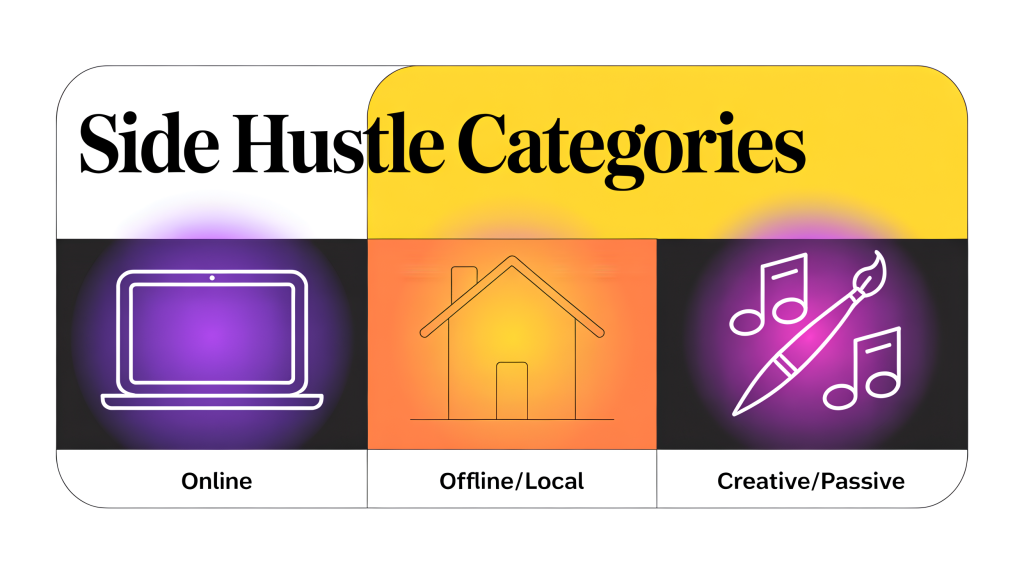
Side hustles can be grouped into three main categories: Online, Offline/Local, and Creative/Passive. Here’s a practical breakdown for beginners, intermediate, and advanced readers.
1. Online Side Hustles
| Side Hustle | How to Start |
|---|---|
| Freelance Writing | Create sample articles, sign up on Upwork, Fiverr, Freelancer, pitch to blogs or businesses directly |
| Freelance Design / Programming | Build a portfolio, use Fiverr, 99Designs, Toptal, start with small projects |
| Selling Digital Products | Make templates, printables, or guides; sell on Etsy, Gumroad, Shopify |
| Dropshipping / Print-on-Demand | Pick products or designs, set up with Shopify + Printful / Oberlo, focus on marketing |
| Affiliate Marketing | Promote products via blog or social media, use Amazon Associates, ShareASale, ClickBank |
Tips by experience level:
Beginners: Freelance writing or selling simple digital products
Intermediate: Dropshipping or affiliate marketing combined with social media
Advanced: Scale online hustles into semi-passive income streams using automation and ads
2. Offline / Local Side Hustles
| Side Hustle | How to Start |
|---|---|
| Tutoring / Teaching | Offer lessons in your expertise, advertise on Wyzant, local Facebook groups |
| Pet Sitting / Dog Walking | List services on Rover, Wag, start with neighbors or friends |
| Delivery / Gig Economy Jobs | Drive for Uber, DoorDash, Instacart, or local delivery companies |
| Local Errands / Odd Jobs | Offer moving help, lawn care, or cleaning through TaskRabbit or local classifieds |
Tips by experience level:
Beginners: Pet sitting, dog walking, delivery jobs
Intermediate: Combine multiple local services for higher earnings
Advanced: Build small teams to manage multiple clients or services
3. Creative / Passive Income Hustles
| Side Hustle | How to Start |
|---|---|
| Selling Stock Photos / Videos | Submit to Shutterstock, Adobe Stock, iStock |
| Monetizing Hobbies | Sell crafts, music, art on Etsy, Bandcamp, Gumroad |
| Printables and Templates | Create digital planners, templates, or graphics; sell on Etsy or Gumroad |
Tips by experience level:
Beginners: Start with hobbies or simple printables
Intermediate: Diversify products and platforms
Advanced: Automate sales, scale through ads, and multiple marketplaces
How to Choose the Right Side Hustle for You
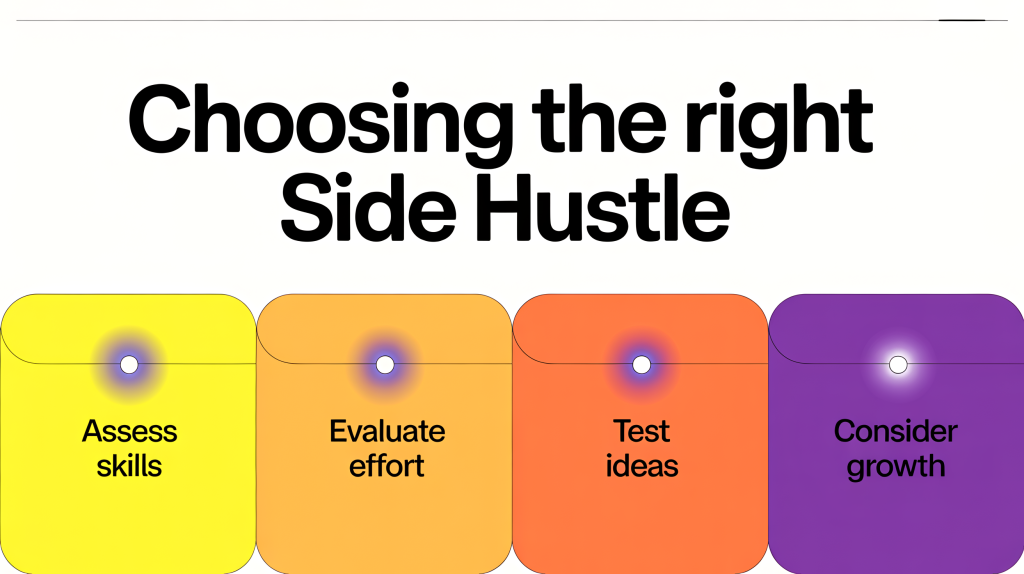
Choosing a side hustle can feel overwhelming because there are so many options. The goal here is to match your time, skills, and resources to a side hustle that you can start quickly and grow over time. Here’s how I break it down:
Step 1: Assess Your Skills and Resources
Before starting, make a clear list of:
Skills: What are you good at? Writing, designing, tutoring, coding, crafting?
Time availability: How many hours per week can you realistically dedicate?
Tools and resources: Do you have a computer, smartphone, camera, or vehicle?
| Factor | Practical Tip |
|---|---|
| Skills | List 3–5 things you can do well and could sell to others |
| Time | Decide if you want a 2–5 hour per week hustle or 10–20+ hours per week |
| Tools | Identify what you already have that can help you start immediately |
Step 2: Evaluate Earning Potential vs. Effort
Every side hustle has a balance between how much effort it takes and how much you can earn. Beginners often pick hustles that are too low-paying or too time-consuming.
| Hustle Type | Quick Tip |
|---|---|
| Low effort, moderate pay | Examples: simple freelance writing, dog walking |
| Medium effort, high pay | Examples: digital products, tutoring |
| High effort, high pay | Examples: dropshipping, building multiple online businesses |
Start with a hustle where you can get results fast, then scale up as you learn.
Step 3: Test Multiple Ideas Quickly
Instead of committing to one hustle right away, try small experiments:
Pick 2–3 side hustles from your list.
Spend 1–2 hours setting up a basic version of each (website, profile, or first product).
Track how easy it is to get your first client, sale, or gig.
Focus on the one that gets traction fastest.
| Step | Action |
|---|---|
| 1 | Select 2–3 hustles that fit your skills and time |
| 2 | Set up minimum viable version of each |
| 3 | Measure early results (first sale, first client, engagement) |
| 4 | Pick the one with best early results to focus on |
Step 4: Consider Long-Term Potential
Even as a beginner, it’s smart to think about where a hustle could go:
Can you increase your rates over time?
Can it scale into a team or automated system?
Can it generate passive or semi-passive income?
Pick a hustle that not only works now but can grow as you gain experience.
Starting with No or Low Money
One of the biggest myths about side hustles is that you need a lot of cash to get started. The truth is, most side hustles can begin with zero upfront cost, and the ones that do require money often let you start small and scale gradually.
If you’re worried about scams or unreliable opportunities, it’s worth reviewing 10 Legit Ways to Make Money Online Without Scams in 2026 before choosing your first hustle.
Here’s how you can get started no matter your budget.
Step 1: Use Free Platforms and Resources
There are tons of free tools and platforms to help you start. You don’t need to invest in expensive software or courses to begin.
| What You Need | Free Options |
|---|---|
| Freelance work / Services | Upwork, Fiverr, Freelancer |
| Selling products online | Etsy (free listings limited), Gumroad, Shopify free trial |
| Affiliate marketing | Amazon Associates, ShareASale, ClickBank |
| Online tutoring | Wyzant, Superprof, Facebook groups |
| Local gigs / errands | TaskRabbit, Rover, Craigslist, local Facebook groups |
Step 2: Learn Skills Quickly Without Paying
If your side hustle requires skills you don’t have yet, you can learn fast using free resources:
YouTube tutorials for design, marketing, or coding
Free online courses on platforms like Coursera, Khan Academy, HubSpot Academy
Free blogs and guides specific to your hustle (for example, Etsy guides for digital products)
Pro tip: Focus on just enough skill to start, then improve as you go. You don’t need to be perfect from day one.
Step 3: Tools You Can Start With for Free
Here’s a list of essential tools you can begin using at no cost:
| Task | Free Tools |
|---|---|
| Writing & Design | Canva, Google Docs, GIMP, Figma |
| Project Management | Trello, Asana, Notion |
| Communication | Gmail, Slack, Zoom |
| Payment & Invoicing | PayPal, Stripe, Wave |
| Website / Store | WordPress.com, Wix free plan, Shopify trial |
Step 4: Get Your First Client or Sale Without Spending
Even without money, you can start making money immediately. Here’s how:
Freelancing: Pitch to small businesses or friends first, using free platforms.
Digital Products: Launch a simple version on Gumroad or Etsy and promote for free via social media.
Local Services: Offer to neighbors, friends, or community groups; advertise in free local groups.
Affiliate Marketing: Start with social media posts or a free blog and include your affiliate links.
Pro tip: Focus on small wins first. Your goal is to make the first $10–$50 to prove it works, then scale from there.
Many beginners aim for their first milestone online, which is covered in How to Make Your First $100 Online Fast in 2026.
Step-by-Step Action Plan to Get Started
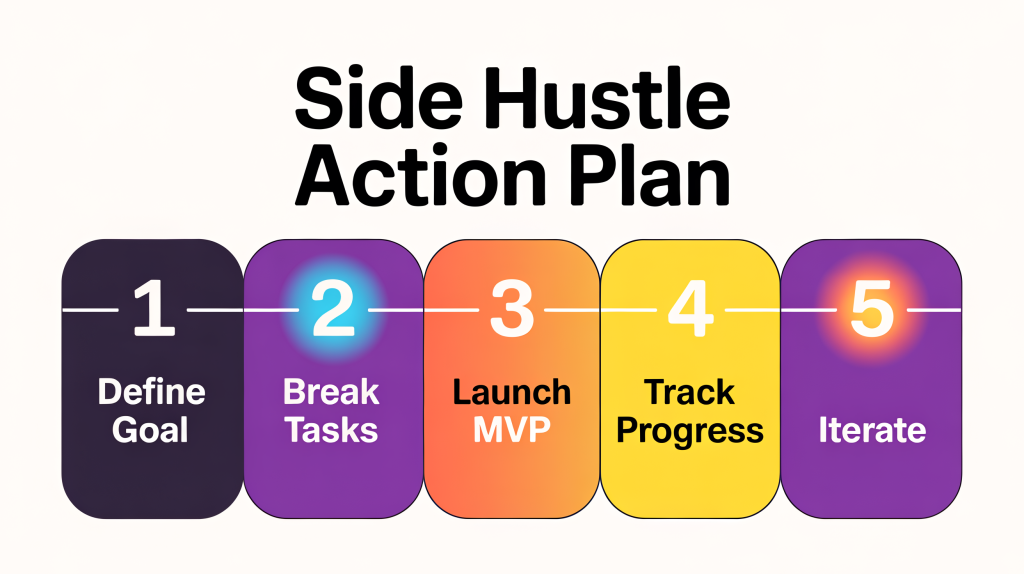
Having a side hustle idea is one thing, but turning it into action is where most people get stuck. Here’s a practical blueprint to move from idea to first results, whether you’re just starting out or already have some experience.
Step 1: Define Your Goal
Before taking any action, decide what you want your side hustle to achieve. Ask yourself:
Are you trying to make extra spending money each week?
Are you aiming for long-term income that could replace your full-time job?
How many hours per week can you commit?
| Goal Type | Practical Tip |
|---|---|
| Extra income | Focus on fast-earning hustles like freelancing, local gigs, or selling simple digital products |
| Long-term growth | Pick hustles with scaling potential like dropshipping, affiliate marketing, or advanced digital products |
Step 2: Break Your Hustle into Small Tasks
Instead of trying to do everything at once, break your side hustle into manageable steps:
| Task Type | Example Actions |
|---|---|
| Setup | Create profiles on freelancing platforms, set up Etsy/Gumroad store, or list local services |
| Offer | Write your first service description, product listing, or pitch |
| Marketing | Share on social media, join relevant groups, or reach out to potential clients |
| Delivery | Complete your first project, fulfill your first order, or manage your first client |
Pro tip: Focus on finishing one small task per day. Small wins build momentum fast.
Step 3: Launch a Minimum Viable Version
You don’t need perfection to start. Launch a minimum viable version (MVV):
Freelance: Offer your service with a simple description and portfolio.
Digital product: Upload a basic version to your store.
Local service: Start with one or two clients to test demand.
Pro tip: The goal is getting feedback and early results, not perfect presentation.
Step 4: Track Your Progress
Tracking your first clients, sales, or leads is crucial to know what works and what doesn’t.
| Metric | How to Track |
|---|---|
| Earnings | Keep a simple spreadsheet of income per client, product, or gig |
| Time spent | Record hours worked per task to measure efficiency |
| Leads / Inquiries | Track all inquiries from clients or potential customers |
Pro tip: Use these numbers to adjust your hustle as you go, doubling down on what works and cutting what doesn’t.
Step 5: Adjust and Iterate
Once you’ve taken your first actions, look at the results:
Did your first client buy or reject your service?
Did your first product get clicks or sales?
Which methods of promotion are bringing results?
Adjust your process, improve your offer, and repeat the steps until you start getting consistent results.
Essential Tools for Side Hustles
Running a side hustle efficiently requires the right tools. Tools save time, keep you organized, and let you focus on earning instead of busywork. You don’t need fancy or expensive software to start—there are free and affordable options that cover everything from communication to payment, productivity, and sales.
Here’s a breakdown by purpose:
| Task | Recommended Tools |
|---|---|
| Writing & Design | Canva (graphics), Google Docs (writing), GIMP or Figma (design) |
| Project Management | Trello, Asana, Notion (organize tasks, deadlines, and projects) |
| Communication | Gmail, Slack, Zoom, WhatsApp Business |
| Payment & Invoicing | PayPal, Stripe, Wave (send invoices, accept payments, track income) |
| Website / Online Store | WordPress.com, Wix free plan, Shopify trial, Gumroad |
| Marketing & Social Media | Buffer, Hootsuite, Mailchimp (schedule posts, email marketing) |
| Productivity / Automation | Zapier, IFTTT, Google Calendar (automate repetitive tasks) |
How to Choose Tools Based on Experience Level
Beginners: Focus on free tools like Google Docs, Canva, Trello, and PayPal. Keep it simple.
Intermediate: Use project management and marketing tools like Asana, Buffer, and Mailchimp to handle multiple clients or products.
Advanced: Automate tasks with Zapier or IFTTT, use premium platforms for e-commerce, and integrate payment and client management systems.
Pro Tip:
You don’t need to use all these tools at once. Start with the basics to launch your hustle, then add new tools as your workload grows. The goal is efficiency without complexity.
If you want additional tools that help you stay focused and organized, you may also find Best Productivity Apps That Actually Improve Focus in 2026 helpful.
Pricing and Value Strategy
Pricing your products or services correctly is one of the most important steps in running a side hustle. Charge too little, and you undervalue your work; charge too much, and you might scare away potential clients. The key is to start reasonable, deliver value, and increase rates over time.
Step 1: Start with Simple Pricing
For beginners, focus on simple, easy-to-understand pricing. Don’t overcomplicate it with packages or add-ons yet.
| Type of Hustle | Beginner Pricing Approach |
|---|---|
| Freelance Services | Charge per project or per hour. Example: $10–$25/hour for writing or design, depending on skill level |
| Digital Products | Start with $5–$20 per product to attract your first buyers |
| Local Services | Charge a flat rate per hour or per task. Example: Dog walking $15/hour, tutoring $20/hour |
| Affiliate Marketing | Use commission-based earnings (usually no upfront cost to customers) |
Step 2: Add Value Over Time
Once you gain experience and have satisfied clients, you can increase your rates or create higher-value offerings:
| Strategy | How to Apply |
|---|---|
| Upgrade Services | Offer faster delivery, multiple revisions, or additional features |
| Create Packages | Bundle services or products for higher prices |
| Niche Focus | Specialize in a specific area to charge premium rates |
| Repeat Clients | Offer discounts for returning clients while keeping standard rates higher for new clients |
Step 3: Track Earnings vs. Effort
It’s important to know if your pricing matches the time and effort required. Track how long each project takes and compare it to your earnings. If your rate feels too low, adjust:
| Metric | Example |
|---|---|
| Hourly Rate | If a project takes 5 hours and pays $50 → $10/hour. Decide if that’s acceptable or needs adjustment |
| Product ROI | Track costs to create and deliver vs. profit. Example: $5 digital product created in 30 minutes → high ROI |
| Client Value | Evaluate if repeat clients or upsells can increase total income over time |
Step 4: Advanced Pricing Strategies
For more advanced hustlers, consider:
Dynamic Pricing: Adjust prices based on demand, project complexity, or client budget.
Tiered Packages: Offer basic, standard, and premium options.
Retainers or Subscriptions: For ongoing services like social media management or content creation.
Client or Customer Management
Managing clients or customers effectively is key to earning consistently and growing your side hustle. Good management means clear communication, meeting expectations, and delivering quality work every time. Here’s how to do it at every level.
Step 1: Communicate Clearly
Clear communication prevents misunderstandings and builds trust.
| Task | How to Apply |
|---|---|
| Introductions | Send a friendly message or email outlining what you do and your rates |
| Setting Expectations | Define deadlines, deliverables, and revisions upfront |
| Updates | Keep clients informed on progress regularly to avoid surprises |
Pro tip: Always respond within 24 hours. Fast communication builds credibility and increases repeat business.
Step 2: Manage Multiple Clients or Projects
Once you start getting more clients, organization becomes critical.
| Method | How to Use |
|---|---|
| Simple Spreadsheet | Track client names, contact info, project status, and deadlines |
| Project Management Tools | Use Trello, Asana, or Notion to assign tasks, track deadlines, and store files |
| Prioritize Tasks | Work on projects with urgent deadlines first while planning upcoming tasks |
Pro tip: Start simple with a spreadsheet if you’re a beginner. Upgrade to project management tools as workload grows.
Step 3: Handle Requests, Revisions, and Feedback
Clients will often ask for revisions or have specific requirements. Handling this professionally keeps them happy and increases your chances of repeat business.
| Situation | Practical Tip |
|---|---|
| Revision Requests | Set a limit upfront (e.g., 1–2 free revisions) and clarify additional costs for extra changes |
| Feedback | Take notes and implement changes quickly; avoid arguing about preferences |
| Special Requests | Assess if it fits your skill set and schedule. Politely decline if it doesn’t, or offer a paid upgrade |
Step 4: Retain Clients and Encourage Repeat Business
Keeping clients over time is easier than constantly finding new ones.
| Strategy | How to Apply |
|---|---|
| Offer Packages | Bundle services or products to increase repeat purchases |
| Provide Incentives | Discounts for returning clients or referrals |
| Stay in Touch | Follow up with past clients with updates, new services, or promotions |
Marketing Your Side Hustle
Marketing is what brings clients and sales. No matter how good your product or service is, without marketing, it won’t sell. The good news is you don’t need a big budget to start—there are plenty of free or low-cost strategies that work.
Step 1: Organic Marketing Strategies
Organic marketing is about getting attention without paying for ads. It’s ideal for beginners and anyone starting with little money.
| Method | How to Apply |
|---|---|
| Social Media | Share your services or products on Instagram, TikTok, LinkedIn, or Facebook; post consistently and engage with your audience |
| Content Marketing | Start a blog, YouTube channel, or newsletter to share valuable content and promote your products/services |
| Word of Mouth | Ask friends, family, and past clients to refer you; offer a small incentive if needed |
| Free Communities | Join Facebook groups, Reddit communities, or online forums where your target audience hangs out |
Pro tip: Pick 1–2 organic methods and focus on them consistently. Too many channels at once can be overwhelming.
Step 2: Paid Marketing Strategies
Paid marketing can accelerate growth once you have a solid offer and basic results from organic methods.
| Method | How to Apply |
|---|---|
| Social Media Ads | Run small campaigns on Facebook, Instagram, or TikTok targeting your ideal audience |
| Google Ads | Target people searching for services or products like yours; start small and test |
| Sponsored Posts / Influencers | Collaborate with micro-influencers or local personalities to promote your products/services |
Pro tip: Start with low-budget tests to see what works before scaling your ad spend.
Step 3: Build a Personal or Business Brand
Branding helps you stand out and attract better clients.
| Step | How to Apply |
|---|---|
| Consistent Visuals | Use the same logo, colors, and style across platforms |
| Professional Profiles | Make sure social media, website, and freelancing profiles clearly communicate what you offer |
| Testimonials | Collect feedback and reviews from early clients to build credibility |
Step 4: Grow Trust and Credibility Quickly
Trust is essential for clients to choose you over competitors.
| Strategy | How to Apply |
|---|---|
| Deliver Quality Work | Always meet deadlines and exceed expectations |
| Share Proof | Post before/after results, sample work, or client feedback |
| Be Transparent | Clearly explain pricing, timelines, and deliverables |
Automation and Time-Saving Techniques
As your side hustle grows, you’ll notice that repetitive tasks—like posting on social media, sending invoices, or answering the same client questions—can take up a lot of your time. Automation and smart systems let you focus on income-generating work, while small tools and processes handle the repetitive stuff.
Step 1: Automate Repetitive Tasks
| Task | How to Automate |
|---|---|
| Social Media Posting | Use Buffer or Hootsuite to schedule posts in advance |
| Emails & Follow-ups | Set up templates or auto-responders using Gmail, Mailchimp, or ConvertKit |
| Client Booking | Use Calendly or Google Calendar to automatically schedule appointments |
| Invoicing | Automate recurring invoices with Wave, Stripe, or PayPal |
Pro tip: Start by automating the tasks that take the most time each week. Even saving 1–2 hours per week adds up fast.
Step 2: Use Templates and Systems
Templates help you standardize your work so you don’t have to start from scratch every time.
| Area | Example |
|---|---|
| Emails | Create reusable email templates for pitches, follow-ups, or replies |
| Documents | Use pre-made contracts, invoices, or proposals |
| Product Listings | Make a template for your product descriptions, images, and pricing |
Pro tip: A few well-made templates save hours every week and reduce mistakes.
Step 3: Outsource Parts of Your Hustle
When your side hustle starts bringing consistent income, outsourcing can help you scale faster without burning out.
| Task to Outsource | How to Find Help |
|---|---|
| Design & Graphics | Hire freelancers on Fiverr or Upwork |
| Admin Work | Use virtual assistants for data entry, emails, or scheduling |
| Marketing | Outsource social media management or content creation |
Pro tip: Start small—delegate one task first, then expand as you grow.
Step 4: Scale Without Burning Out
Combine automation, templates, and outsourcing to work smarter, not harder.
| Strategy | How to Apply |
|---|---|
| Time Blocking | Schedule focused work hours for income-generating tasks |
| Standard Operating Procedures (SOPs) | Document processes for tasks so anyone can follow them |
| Batch Work | Group similar tasks together to complete more efficiently (e.g., create all social media posts for the week in one session) |
Tracking Progress and Metrics
Tracking progress is how you know what’s working and what isn’t. Without measurement, you’re guessing, and that can waste time, money, and energy. By keeping simple metrics, you can optimize your efforts and grow faster, no matter your experience level.
Step 1: Track Earnings
Knowing exactly how much you’re making helps you identify your most profitable activities.
| Metric | How to Track |
|---|---|
| Total Income | Record all payments from clients or sales in a spreadsheet |
| Income per Hustle | Track income separately for each service or product to see which earns the most |
| Hourly Rate | Divide income by hours worked to know your effective rate |
Pro tip: Track weekly to spot trends and make adjustments quickly.
Step 2: Track Time and Productivity
Time tracking lets you see which tasks are worth your effort and which are wasting your time.
| Metric | How to Track |
|---|---|
| Hours Worked | Use a simple timer or spreadsheet to log daily hours |
| Time per Task | Record how long each project or task takes, then compare it to income generated |
| Bottlenecks | Note tasks that consistently slow you down so you can automate or delegate them |
Step 3: Track Leads and Conversions
If your hustle involves clients or customers, tracking leads and conversions is crucial.
| Metric | How to Track |
|---|---|
| Leads | Number of inquiries, messages, or website contacts |
| Conversions | How many leads turn into paying clients or sales |
| Source | Track where leads come from (social media, referrals, ads) to focus your efforts |
Pro tip: Focus on channels that consistently bring results and scale them.
Step 4: Track Growth Over Time
For intermediate and advanced hustlers, tracking growth helps you plan scaling strategies.
| Metric | How to Track |
|---|---|
| Monthly Revenue | Compare month-to-month earnings to identify trends |
| Repeat Clients | Track percentage of repeat clients to measure customer satisfaction |
| Product or Service Performance | Identify which items or services sell best for optimization and scaling |
Common Mistakes to Avoid
Making mistakes is part of learning, but many side hustlers lose time, money, or momentum because they repeat avoidable errors. Here’s a guide to the most common pitfalls and how to handle them.
Mistake 1: Overthinking Before Starting
| Mistake | How to Avoid |
|---|---|
| Waiting for the “perfect” plan, skill, or setup before starting | Launch a minimum viable version (MVV), track early results, and improve as you go |
Tip: Action beats perfection. Start small and refine over time.
Mistake 2: Trying to Do Everything Yourself
| Mistake | How to Avoid |
|---|---|
| Handling all tasks alone—design, marketing, admin, client management | Use templates, automation, or outsource repetitive tasks once income allows |
Tip: Focus on tasks that directly generate income and delegate the rest.
Mistake 3: Ignoring Client Feedback
| Mistake | How to Avoid |
|---|---|
| Not listening to clients or customers, leading to poor reviews or lost business | Track feedback carefully, implement changes, and clarify expectations upfront |
Tip: Feedback is free data that helps improve your services or products.
Mistake 4: Chasing Trends Instead of Long-Term Growth
| Mistake | How to Avoid |
|---|---|
| Jumping on the latest “hot” idea without validating it or building a system | Focus on hustles with scalable potential, repeatable systems, and proven demand |
Tip: Trends can supplement your income, but core hustles should have long-term viability.
Mistake 5: Underpricing Services or Products
| Mistake | How to Avoid |
|---|---|
| Charging too little for fear of losing clients | Start reasonable, track earnings vs. effort, and increase prices over time |
Tip: Proper pricing ensures sustainability and allows you to grow.
Frequently Asked Questions (FAQs)
Even when you have a clear plan, people often have similar questions before taking action. Here’s a practical guide to the most common questions about starting and growing a side hustle.
1. How fast can I make money?
| Question | Answer |
|---|---|
| How quickly will I earn? | It depends on the hustle. Freelancing or local services can bring money within days, while digital products or affiliate marketing may take weeks to get the first sale. The key is to launch quickly and track results. |
2. Do I need experience or special skills?
| Question | Answer |
|---|---|
| Can I start with no experience? | Yes. Many side hustles allow you to learn while earning. Start with beginner-friendly options like freelance writing, local services, or simple digital products. Advanced skills can increase income later. |
3. Can I turn this into a full-time business?
| Question | Answer |
|---|---|
| Is scaling possible? | Absolutely. Most side hustles—freelancing, digital products, dropshipping, affiliate marketing—can scale. Focus on building systems, automating tasks, and adding income streams to transition from side hustle to full-time business. |
4. How do I handle multiple hustles at once?
| Question | Answer |
|---|---|
| Can I run more than one hustle? | Yes, but start with one main hustle first. Track your time, automate repetitive tasks, and expand only when you can handle extra projects without losing quality. |
5. What if I fail at my first hustle?
| Question | Answer |
|---|---|
| How do I recover from failure? | Don’t panic. Treat it as a learning opportunity. Analyze what didn’t work, make adjustments, and try another approach or hustle. Most successful hustlers fail fast, learn, and move on quickly. |
6. How do I find clients or customers quickly?
| Question | Answer |
|---|---|
| Fast ways to get clients? | Start with friends, family, and local communities. Use free platforms like Upwork, Fiverr, Etsy, or Facebook groups. Promote your service/product consistently and focus on delivering quality work. |
Scaling Your Side Hustle
Once your side hustle is making consistent money, it’s time to grow it strategically. Scaling isn’t about working harder—it’s about working smarter, automating, and adding new income streams.
Step 1: Identify What’s Working
Before scaling, know which parts of your hustle are profitable:
| Metric | How to Use |
|---|---|
| Income | Focus on products, services, or clients that generate the most revenue |
| Time vs. Reward | Prioritize tasks that earn more per hour |
| Growth Potential | Invest in areas that can be scaled with systems or automation |
Step 2: Add New Income Streams
Diversifying income reduces risk and accelerates growth.
| Strategy | How to Apply |
|---|---|
| Expand Offerings | Add related products or services your audience needs |
| Upsell or Bundle | Offer premium packages or complementary services |
| Affiliate Partnerships | Promote products or services you trust to earn commissions |
| Online Courses or Memberships | Package your knowledge or services for recurring income |
Step 3: Automate and Delegate
Scaling requires freeing up your time so you can focus on growth instead of day-to-day tasks.
| Task | How to Scale |
|---|---|
| Repetitive Work | Automate with Zapier, IFTTT, or scheduling tools |
| Client Management | Delegate communication or administrative tasks to virtual assistants |
| Production | Outsource content creation, product fulfillment, or design work |
Step 4: Build a Small Team
For advanced hustlers, building a small team allows faster growth without burning out.
| Role | How to Implement |
|---|---|
| Virtual Assistant | Handles admin, scheduling, customer support |
| Freelancers | Support design, writing, or technical tasks |
| Marketing Specialists | Manage social media, ads, or content |
Pro tip: Start small—delegate one task first, then expand as revenue grows.
Step 5: Monitor Metrics and Optimize
Even at scale, tracking remains crucial. Focus on profit, efficiency, and client satisfaction.
| Metric | How to Use |
|---|---|
| Revenue per Stream | Focus growth on highest-earning services/products |
| Client Retention | Keep repeat clients happy to maintain consistent income |
| ROI of Tools or Ads | Invest only in tools or paid marketing that give clear returns |
Conclusion
Starting a side hustle doesn’t have to be complicated, expensive, or time-consuming. By following the steps in this guide, you now have a complete roadmap to go from zero to a growing, income-generating hustle.
Remember, the key to success is consistent action and using practical systems. Start small, track results, and scale strategically.
By following this guide, you now have everything you need to start, manage, and grow a side hustle from beginner level all the way to advanced income-generating systems. The next step is simple: pick your first task and get started today.